
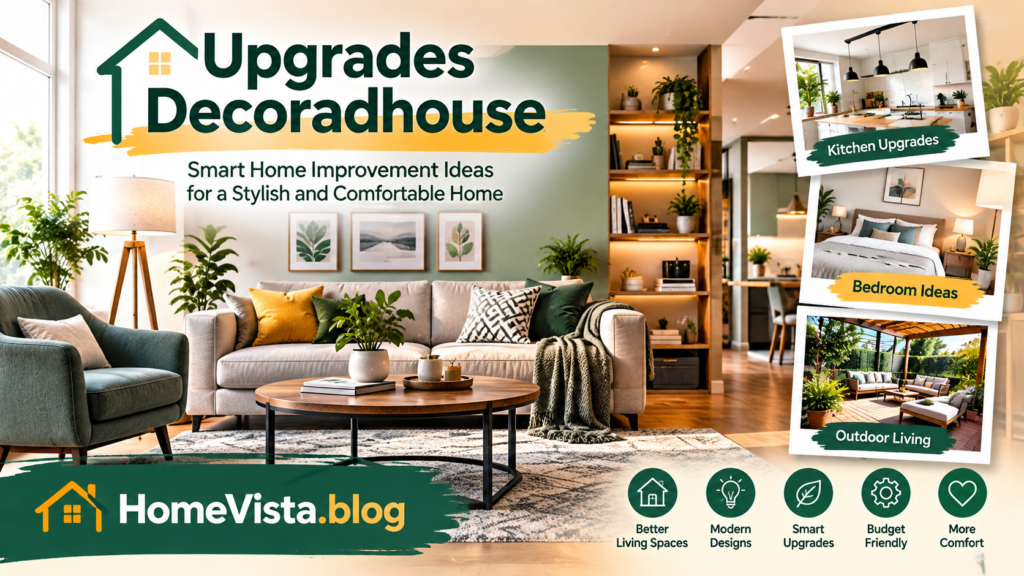
A beautiful home is more than just a place to live. It is a personal space where comfort, functionality, and style come together. Whether you own a small apartment or a spacious family house, the right home upgrades can make your living environment more attractive, organized, and comfortable. Upgrades Decoradhouse represents the idea of improving your home through creative decorating choices, practical renovations, and modern interior design solutions. Home improvement does not always require a large budget or a complete renovation. Simple changes, such as updating lighting, refreshing wall colors, replacing old hardware, or organizing furniture, can make a noticeable difference. With careful planning, homeowners can create a stylish living space that reflects their personality while meeting their everyday needs. In this guide, we will explore practical home upgrade ideas, affordable decorating solutions, modern design trends, and maintenance tips to help you improve your living space.
Refresh Your Interior with Modern Colors
One of the easiest ways to upgrade your home is by changing its color scheme. Wall colors influence the atmosphere of a room and can make a space feel brighter, larger, warmer, or more relaxing. Neutral colors such as white, beige, cream, and light gray remain popular because they work well with different furniture styles. These shades are particularly useful in smaller rooms where natural light is limited. For homeowners who prefer more personality, accent walls can introduce color without overwhelming the entire space. Deep green, navy blue, terracotta, and muted brown are attractive options for living rooms and bedrooms. You can also coordinate wall colors with curtains, rugs, cushions, and furniture. A consistent color palette helps create a balanced appearance throughout the house. Before painting, test a small sample on the wall and observe how it looks in natural and artificial lighting. This simple step can help you choose the right shade.
Upgrade Lighting for Better Comfort
Lighting is an essential part of interior design. The right lighting can improve the appearance of your home, highlight decorative features, and make everyday activities easier. Start by maximizing natural light. Use lightweight curtains, keep windows clean, and avoid placing bulky furniture directly in front of windows. For artificial lighting, consider combining three types:
- Ambient lighting: Provides general illumination throughout the room.
- Task lighting: Helps with activities such as reading, cooking, and working.
- Accent lighting: Highlights artwork, shelves, architectural details, or decorative objects.
Pendant lights can improve the appearance of dining areas, while bedside lamps create a relaxing bedroom atmosphere. Under-cabinet lighting can also make kitchen work surfaces more practical. Energy-efficient LED bulbs are another useful upgrade. They generally consume less electricity than traditional incandescent bulbs and are available in different brightness levels and color temperatures. Choose lighting according to the purpose of each room rather than following trends alone.
Improve Your Kitchen Without a Complete Renovation
The kitchen is one of the most frequently used spaces in a home. Upgrading it can improve convenience, organization, and visual appeal. If replacing cabinets is too expensive, consider repainting existing cabinet doors. New handles and knobs can provide a more modern appearance at a relatively low cost. You can also improve storage by installing drawer organizers, shelf dividers, and wall-mounted racks. These additions help keep frequently used items accessible while reducing countertop clutter. Updating an old backsplash can make a significant visual difference. Depending on your budget and the existing surface, you might choose ceramic tiles, suitable backsplash panels, or other easy-to-clean materials. Pay attention to lighting above countertops and work areas. Good illumination makes food preparation more comfortable and helps create a welcoming atmosphere. Before making major kitchen changes, measure available space carefully and prioritize improvements that solve your everyday problems.
Make Your Living Room More Inviting
The living room often serves as the main gathering place for family members and guests. A thoughtful arrangement can make it more comfortable without requiring expensive furniture. Begin by identifying the room’s main purpose. If your family watches television together, arrange seating around the viewing area. If conversation is more important, position chairs and sofas so people can comfortably face one another. A well-sized area rug can define the seating arrangement and connect different pieces of furniture. Decorative cushions and throws introduce texture and color without requiring a complete furniture replacement. Wall art, mirrors, plants, and carefully selected accessories can also enhance the room. However, avoid filling every available surface with decorations. Leaving some open space helps the room feel calmer and more organized. If your living room is small, choose furniture with suitable proportions and consider pieces that provide additional storage.
Create a Relaxing and Functional Bedroom
A comfortable bedroom supports rest and relaxation. For this reason, bedroom upgrades should focus on comfort as well as appearance. Start with the bed, since it is usually the main feature of the room. Clean bedding, coordinated pillow covers, and a suitable headboard can improve the overall look. Choose calming colors such as soft blue, warm beige, pale green, or off-white. These shades can help create a peaceful atmosphere when combined with comfortable lighting and uncluttered surroundings. Storage is another important consideration. Under-bed containers, wardrobe organizers, and bedside tables with drawers can help keep personal belongings organized. Consider blackout curtains if outside light interferes with sleep. Soft bedside lighting can also provide a more relaxing alternative to bright overhead lights in the evening. Finally, reduce unnecessary electronic clutter and keep frequently used items within easy reach. A clean, functional bedroom can feel more spacious and pleasant.
Upgrade Your Bathroom with Simple Improvements
Bathroom improvements can increase comfort and make the space easier to maintain. Even small changes can create a cleaner, more modern appearance. Replacing outdated cabinet handles, towel bars, shower curtains, or mirrors can refresh the room without major construction. Coordinating these accessories creates a more consistent design. Storage solutions are especially valuable in small bathrooms. Wall-mounted shelves, baskets, and organizers can keep toiletries accessible while freeing up countertop space. Check faucets, showerheads, and visible plumbing fixtures for leaks or damage. Repairing leaks can help reduce water waste and prevent moisture-related problems. You may also consider installing a water-efficient showerhead or faucet aerator when compatible with your existing plumbing. For more substantial upgrades, choose durable, moisture-resistant materials and ensure proper ventilation. Persistent moisture can contribute to mold growth and damage finishes, so an effective exhaust fan is an important practical feature.
Bring Nature into Your Home
Plants and natural materials can make interior spaces feel more welcoming. They introduce texture, visual interest, and a connection to the outdoors. Indoor plants such as pothos, snake plants, and spider plants are popular choices, although their suitability depends on available light, watering habits, and household conditions. Place plants on shelves, windowsills, side tables, or in empty corners where they can receive appropriate care. Select pots that complement your existing color scheme. Natural materials such as wood, cotton, linen, bamboo, and jute can also create warmth. A wooden side table, woven basket, or textured cushion may be enough to introduce this look. If you have limited time for plant care, choose low-maintenance varieties and check whether they are safe for pets or children in your household.
Improve Energy Efficiency and Smart Home Features
Modern home upgrades can make daily life more convenient while helping manage energy consumption. Start with simple improvements such as sealing drafts around windows and doors, using suitable insulation, and replacing inefficient light bulbs. These changes can improve comfort and may reduce heating or cooling costs, depending on your home and climate. Smart thermostats can help regulate indoor temperatures when compatible with your heating and cooling systems. Smart plugs and lighting controls may allow you to manage selected devices more conveniently. For security, consider motion-activated outdoor lights, suitable door sensors, or a smart doorbell. Before purchasing connected devices, check compatibility with your Wi-Fi network, smartphone, and existing smart home ecosystem. Privacy and cybersecurity also matter. Use strong, unique passwords, enable available security updates, and review the permissions required by connected devices. The best smart home upgrades solve real problems rather than adding technology simply because it is fashionable.
Upgrade Your Outdoor Space
Your home’s exterior contributes to its overall appearance and can provide additional space for relaxation. Begin with basic maintenance. Clean walkways, remove weeds, trim overgrown plants, and repair visible damage where necessary. These tasks can make the exterior look more cared for. For a porch or patio, consider comfortable outdoor seating, weather-resistant cushions, and attractive planters. Solar garden lights may help illuminate paths or highlight selected landscape features, provided they receive sufficient sunlight. A fresh coat of exterior paint can also improve curb appeal, but the surface should be properly prepared and the paint should be suitable for the material and local weather conditions. If you have a small yard, vertical planters and compact seating can make better use of limited space. Always prioritize outdoor improvements that are durable, practical, and appropriate for your local climate.
Plan Your Home Upgrades on a Budget
A successful home improvement project begins with a realistic budget. Without a plan, small purchases can accumulate and make the final project more expensive than expected. First, list the areas that need attention. Separate essential repairs from cosmetic improvements. Problems such as leaking pipes, damaged electrical systems, or water intrusion should generally take priority over decorative changes. Next, estimate material costs, labor charges, delivery fees, and any required permits. For larger projects, keep a contingency allowance for unexpected expenses. You can save money by repainting usable furniture, reusing existing accessories, shopping during sales, and completing simple tasks yourself when it is safe to do so. However, electrical work, structural modifications, gas connections, and other specialized jobs should be handled by qualified professionals when required. Compare product quality as well as price. Durable materials may cost more initially but can provide better long-term value.
Common Home Decorating Mistakes to Avoid
While upgrading a home, avoid purchasing furniture before measuring the available space. Oversized pieces can make rooms difficult to use and create unnecessary clutter. Another common mistake is choosing decorative items without considering the overall design. Different styles can work together, but repeating a few colors, materials, or shapes helps maintain visual balance. Poor lighting can also reduce the impact of otherwise attractive interiors. Plan lighting around the activities performed in each room. Finally, do not ignore maintenance. Fresh paint and new furniture cannot compensate for persistent leaks, damaged flooring, poor ventilation, or unsafe electrical systems. A practical upgrade plan combines appearance, functionality, safety, and long-term care.
Conclusion
Upgrades Decoradhouse is a useful concept for homeowners who want to make their living spaces more attractive, functional, and comfortable. From refreshing wall colors and improving lighting to organizing kitchens, modernizing bathrooms, and adding smart home features, there are many ways to improve a property without undertaking a complete renovation. The key is to identify your priorities, choose improvements that suit your budget, and make decisions based on your household’s needs. Small changes can deliver meaningful results when they are planned carefully and maintained properly.
Whether you are refreshing one room or gradually improving your entire property, a thoughtful approach to home upgrades can help you create a welcoming space that reflects your personal style. Explore more home improvement ideas, decorating inspiration, and practical design tips on HomeVista.blog to make your home more beautiful, comfortable, and efficient. Visit my site for more details.