
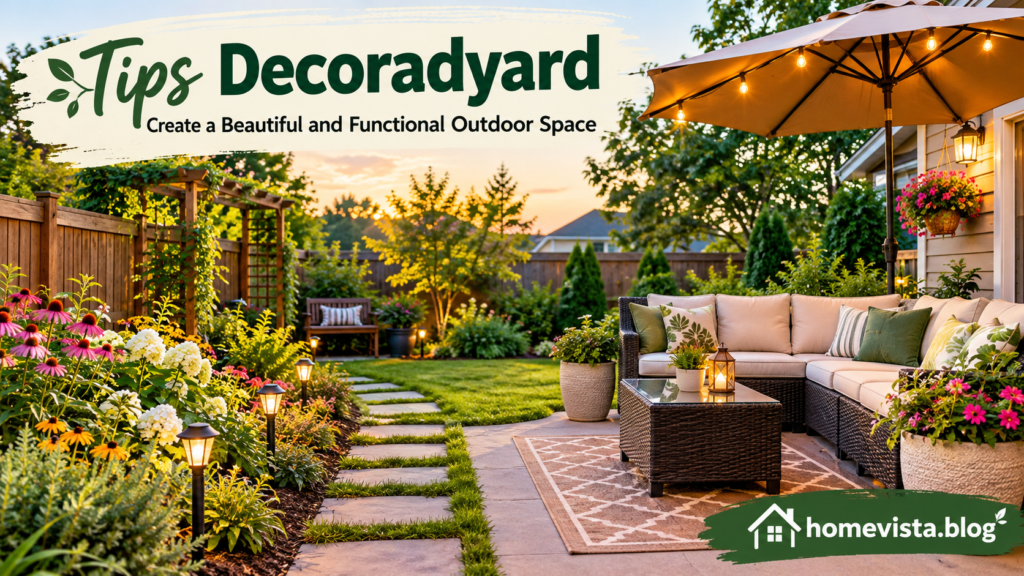
A beautiful yard can make your home more attractive, comfortable, and enjoyable. Whether you have a small backyard, a spacious garden, or a simple outdoor area, the right design choices can transform it into a relaxing space for family gatherings, gardening, and entertainment. With the help of practical Tips Decoradyard, homeowners can improve their outdoor spaces without spending a fortune. Decorating a yard does not always require expensive furniture, professional landscaping, or complicated construction. Small improvements, such as adding colorful flowers, installing outdoor lighting, arranging comfortable seating, and using decorative planters, can make a significant difference. The key is to choose ideas that match your available space, personal style, and budget. In this guide, you will discover useful backyard decorating ideas, landscaping tips, affordable improvements, and simple ways to maintain an attractive outdoor environment throughout the year.
Start with a Clear Yard Design Plan
Before purchasing decorations or planting flowers, take some time to plan your yard. A clear design plan helps you understand how to use the available space and avoid unnecessary expenses. Begin by measuring your yard and identifying its main features. Consider the location of trees, fences, pathways, doors, and existing garden beds. Think about how you want to use the area. For example, you might want a quiet reading corner, a space for children to play, or an outdoor dining area. Divide a larger yard into functional zones. One section can contain garden plants, another can provide seating, and a third can serve as an entertainment area. For smaller yards, avoid adding too many decorative objects. Keeping the layout simple creates a more open and organized appearance.
Choose Plants That Match Your Climate
Plants are among the easiest ways to make an outdoor area feel fresh and inviting. However, choosing the right plants is essential for a healthy and attractive garden. Before selecting flowers, shrubs, or trees, consider your local climate, soil conditions, sunlight, and watering requirements. Native plants are often a practical choice because they are adapted to local environmental conditions. You can combine plants of different heights to create visual interest. Taller shrubs can provide privacy, medium-sized plants can fill garden beds, and smaller flowers can add color along pathways. Container gardening is another excellent option, particularly for patios and small yards. Place pots near entrances, seating areas, or garden corners to introduce greenery without requiring additional ground space. For a balanced look, choose a consistent color palette instead of mixing too many unrelated flower colors.
Create a Comfortable Outdoor Seating Area
A comfortable seating area can turn an ordinary backyard into a favorite place to relax. You do not need a large patio or expensive furniture to create an inviting outdoor retreat. Start with a weather-resistant bench, a small table, or a pair of outdoor chairs. Add cushions designed for outdoor use to improve comfort and introduce attractive colors. If your yard receives strong sunlight, consider a shade umbrella, pergola, or suitable shade sail. These additions can make the area more comfortable during warm weather. Arrange the furniture to encourage conversation and leave enough room for people to walk around easily. A small outdoor rug can help define the seating zone, provided it is suitable for outdoor conditions. When selecting furniture, prioritize durability and easy maintenance. Materials designed to withstand rain, sunlight, and changing temperatures can help reduce replacement costs over time.
Improve Your Yard with Outdoor Lighting
Outdoor lighting can make a yard look beautiful after sunset while improving visibility along frequently used routes. Solar pathway lights are a convenient option because they generally do not require new electrical wiring. Place them along garden paths, near steps, or around the entrance to help people navigate the space. String lights can create a welcoming atmosphere around a patio, pergola, or seating area. Lanterns and small accent lights can also highlight decorative features. For safety, use suitable outdoor-rated lighting products and follow the manufacturer’s installation instructions. Steps, entrances, and changes in ground level should receive particular attention. Avoid excessive brightness. A combination of gentle ambient lighting and focused task lighting usually creates a more comfortable environment.
Add Affordable DIY Decorations
One of the most useful Tips Decoradyard strategies is to use creativity instead of relying entirely on expensive products. Do-it-yourself decorations can personalize your yard while keeping costs manageable. Old containers can become attractive planters when they are cleaned and prepared for outdoor use. Wooden crates can be repurposed as decorative storage or plant displays if they are structurally sound and weather-resistant. You can also refresh an existing garden bench with an appropriate outdoor finish or repaint suitable garden pots in complementary colors. Create a simple focal point with a large planter, a decorative birdbath, or an attractive arrangement of stones. Choose one or two standout features rather than filling every corner with decorations. Before reusing an item outdoors, make sure it is safe, stable, and suitable for exposure to weather. Good preparation helps DIY projects remain attractive for longer.
Design a Beautiful Garden Pathway
A pathway adds structure to a yard and makes it easier to move between different areas. It can also create a more polished appearance without requiring major landscaping work. Depending on your budget and design preferences, you can use stepping stones, gravel, pavers, or other suitable outdoor materials. For a natural appearance, place stepping stones through a grassy area or beside flower beds. For a more formal design, use evenly spaced pavers with consistent shapes and colors. Make sure the pathway is stable, reasonably level, and suitable for the people who will use it. Proper drainage is important because standing water can make surfaces slippery and damage some materials. You can soften the edges of a path with low-growing plants or small garden lights. Keep plants trimmed so they do not obstruct walking areas.
Use Vertical Gardening for Small Yards
Limited outdoor space does not mean you must give up on gardening. Vertical gardening allows you to grow plants upward instead of using valuable ground space. Wall-mounted planters, sturdy plant stands, trellises, and hanging baskets can help you display flowers and greenery in compact areas. Climbing plants can add natural beauty to suitable fences or garden structures. Before installing vertical planters, confirm that the wall or support can safely handle their weight, particularly after watering. Herbs such as basil, mint, and parsley may also grow well in appropriately sized containers when their sunlight and watering needs are met. Vertical gardening is especially useful for townhouses, small patios, and narrow backyard spaces. It adds greenery while keeping the floor area available for seating and movement.
Make Your Yard More Private
Privacy can make an outdoor space more comfortable, especially when neighboring houses are close together. Depending on your yard layout, you can use shrubs, hedges, climbing plants, decorative screens, or outdoor curtains to create a more secluded environment. Tall plants can provide a natural visual barrier, but choose varieties that suit your climate and available space. Consider their mature height, root growth, and maintenance needs before planting them near structures. A trellis with climbing plants can also create an attractive boundary around a seating area. For a quicker solution, a suitable outdoor screen may offer privacy without requiring years of plant growth. Check local regulations and property boundaries before installing tall fences or permanent structures.
Create a Family-Friendly Backyard
A well-designed yard can provide a useful outdoor area for the entire family. The best design depends on the ages, interests, and needs of the people who use it. Families with children can reserve a clear section for outdoor games. Keep sharp objects, poisonous plants, and unstable decorations away from play areas. If you enjoy entertaining, consider a dining table, a barbecue area, or extra movable chairs. Position cooking equipment away from flammable materials and follow all relevant fire-safety instructions. For a peaceful environment, add a comfortable bench beneath a suitable shade tree or create a small reading corner surrounded by plants. Leave enough open space for movement and avoid overcrowding the yard with furniture. A flexible layout makes it easier to adapt the space for different activities.
Maintain Your Yard Throughout the Year
Regular maintenance is essential for keeping your outdoor space attractive. Even the best decorating ideas can lose their appeal if plants become overgrown or furniture is left dirty and damaged. Create a simple maintenance routine that includes removing weeds, watering plants according to their needs, trimming suitable shrubs, and cleaning pathways. Inspect outdoor furniture and lighting periodically for signs of wear. Store cushions and other vulnerable accessories when severe weather is expected. Seasonal changes may also require adjustments. During warmer months, focus on watering, shade, and plant health. In cooler seasons, remove fallen leaves, protect sensitive plants where appropriate, and prepare outdoor furniture for changing conditions. Using mulch in suitable garden beds can help conserve soil moisture and reduce weed growth. Choose the right mulch for your plants and avoid piling it directly against tree trunks. A little regular attention can prevent small problems from becoming expensive repairs.
Conclusion
Creating an attractive outdoor space does not have to be difficult or expensive. By following these practical Tips Decoradyard, homeowners can improve the appearance, comfort, and usefulness of their yards with simple design choices. Start by planning your layout, selecting suitable plants, and creating a comfortable seating area. Then consider outdoor lighting, DIY decorations, garden pathways, and vertical gardening to make the most of your available space. Remember that the best backyard design is one that suits your lifestyle, climate, and budget. Focus on improvements that provide real value instead of following every trend. With thoughtful planning and regular maintenance, even a small yard can become a welcoming outdoor retreat where you can relax, spend time with family, and enjoy the beauty of nature. Visit my site for more details.