
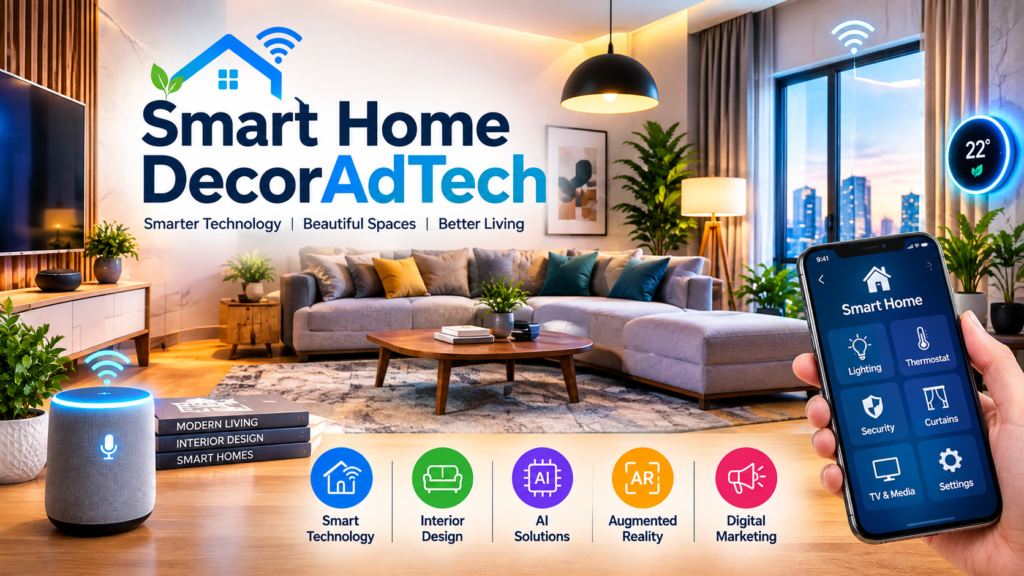
The way we design and experience our homes is changing rapidly. Modern homeowners are no longer interested in choosing furniture, lighting, and decorative accessories based only on appearance. Today, technology has become an important part of interior design, creating a new concept known as Smart Home DecorAdTech. Smart Home DecorAdTech combines smart-home technology, interior decoration, digital tools, and advertising technology to create living spaces that are both beautiful and intelligent. From automated lighting and connected furniture to smart mirrors and personalized home experiences, technology is making homes more convenient while also changing how people discover and purchase home décor products. For homeowners, this evolution offers exciting possibilities. Instead of treating technology and decoration as separate elements, Smart Home DecorAdTech brings them together into one connected experience.
What Is Smart Home DecorAdTech?
Smart Home DecorAdTech can be understood as the combination of three major areas: smart-home technology, home décor, and advertising technology.
Smart-home technology includes connected devices such as smart lights, thermostats, security cameras, voice assistants, automated curtains, and smart appliances. Home décor focuses on furniture, colors, wall art, lighting design, accessories, and overall interior aesthetics. AdTech, or advertising technology, uses digital tools and data to help brands promote products to the right audiences. When these areas work together, homeowners can discover décor products digitally, visualize them inside their homes, and connect them with smart technology. For example, a homeowner may use an augmented-reality application to see how a particular lamp or sofa would look in the living room before purchasing it. After installation, the lamp could connect to a smart-home system and automatically adjust its brightness according to the time of day. This is where Smart Home DecorAdTech becomes more than a simple design trend.
Why Smart Technology Is Becoming Important in Home Décor
Technology has become part of everyday life, so it is natural that it is becoming part of interior design as well. People want their homes to be comfortable, efficient, attractive, and easy to manage. Traditional décor mainly focuses on visual appeal. Smart décor adds functionality to that visual experience. For instance, modern lighting can serve both decorative and practical purposes. Smart LED systems can change brightness and color, allowing homeowners to create different atmospheres for working, relaxing, dining, or entertaining guests. Similarly, motorized curtains can complement a room’s design while automatically opening and closing according to schedules or sunlight levels. This combination of beauty and functionality is one of the biggest advantages of smart home décor.
Smart Lighting and Interior Design
Lighting is one of the most effective ways to transform an interior space. With smart lighting technology, homeowners have much greater control over the atmosphere of their rooms. Smart bulbs and connected lighting systems can often be controlled through mobile applications, voice assistants, or automated schedules. Homeowners can adjust brightness without manually operating switches and create lighting scenes for different occasions. For example, warm lighting can create a relaxing environment in a bedroom, while brighter lighting can make a home office more suitable for focused work. Decorative smart lighting can also become a central design feature. Modern pendant lights, LED strips, illuminated mirrors, and artistic fixtures can combine technology with contemporary aesthetics.
Smart Furniture for Modern Homes
Furniture is also becoming smarter. Designers and manufacturers are introducing products that combine traditional functionality with digital features. Smart desks, for example, may include charging ports, wireless charging surfaces, cable-management systems, and adjustable heights. Smart beds can include features designed around comfort and connected-home experiences. Even ordinary furniture can become part of a smart environment when paired with connected accessories. The goal is not necessarily to fill every room with technology. Instead, successful smart décor integrates technology naturally so that it supports the homeowner without making the space feel overly technical.
The Role of Artificial Intelligence in Home Décor
Artificial intelligence is changing the way people approach interior design. AI-powered tools can analyze room layouts, suggest furniture arrangements, recommend color combinations, and generate design concepts. Someone planning a living-room renovation can use digital design tools to explore multiple ideas before purchasing anything. This can save time and help homeowners understand how different styles might work in their available space. AI can also contribute to personalization. Instead of offering the same recommendations to every customer, digital platforms can consider preferences such as interior style, room size, colors, budget, and previous purchases. For home décor businesses, this creates opportunities to provide more relevant product recommendations.
Augmented Reality and Virtual Home Design
One of the most useful technologies for home décor is augmented reality, commonly known as AR. Buying furniture online can sometimes be difficult because customers cannot physically see how an item will look in their homes. AR technology helps solve this problem by allowing users to digitally place products within their real environment. A customer could use a smartphone camera to preview a sofa, table, rug, mirror, or decorative item in a particular room. This technology can make online shopping more interactive and reduce uncertainty before a purchase. It also gives décor brands a powerful way to connect digital marketing with real-world interior design.
How AdTech Is Changing Home Décor Marketing
Advertising technology plays an important role in connecting consumers with home décor products.
Instead of showing identical advertisements to everyone, digital advertising platforms can use information about browsing behavior, interests, and shopping activity to deliver more relevant advertisements. For example, someone searching for minimalist bedroom furniture may later see advertisements featuring related products or design ideas. For home décor brands, this can create a more personalized customer journey. A potential customer may first discover a design idea through social media, explore products on a website, visualize an item using AR, and eventually complete a purchase online. This connected journey demonstrates how DecorAdTech can influence modern home shopping.
Smart Home Décor and Energy Efficiency
Smart technology can also support more efficient homes. Automated lighting, smart thermostats, and connected appliances can help homeowners manage energy use more effectively. For example, smart lighting systems can be programmed to turn off when rooms are not being used. Automated blinds can help control sunlight and indoor temperatures. Although individual results depend on the technology, home design, climate, and user behavior, smart-home systems can make energy management more convenient. This is particularly important as homeowners become increasingly interested in sustainability and responsible use of resources.
Personalization Is the Future of Home Design
Every homeowner has different tastes. Some people prefer minimalist interiors, while others enjoy traditional, industrial, Scandinavian, or contemporary designs. Smart Home DecorAdTech makes it possible to create more personalized experiences. Digital platforms can help users explore products based on their preferred style and budget. Smart devices can then adapt to personal routines. Imagine entering your living room in the evening and having the lights automatically adjust to your preferred brightness while your smart speakers play music and your curtains close automatically. The décor remains visually appealing, but technology quietly works in the background.
Benefits for Homeowners
Smart Home DecorAdTech offers several potential benefits:
Greater Convenience
Connected devices can automate everyday tasks and reduce the need for manual controls.
Personalized Experiences
Smart systems can be adjusted according to individual preferences, routines, and lifestyles.
Better Online Shopping
AR, AI, and interactive design tools can help consumers make more informed décor decisions.
Improved Functionality
Furniture, lighting, and accessories can provide both decorative and practical benefits.
Modern Aesthetics
Technology can be incorporated into contemporary designs without sacrificing visual appeal.
Challenges of Smart Home DecorAdTech
Despite its advantages, smart home technology also comes with challenges. Cost is one consideration. Advanced smart devices and connected furniture can be more expensive than traditional alternatives. Privacy and security are also important. Connected devices may collect or process information, so homeowners should understand the privacy settings and security features of the products they use. Compatibility can be another issue. Different smart-home products may use different ecosystems or standards. Before purchasing multiple devices, consumers should check whether the products can work together. Finally, technology should not replace good interior design. A room filled with smart devices is not automatically attractive. The best results come from balancing technology, comfort, functionality, and aesthetics.
The Future of Smart Home DecorAdTech
The future of Smart Home DecorAdTech is likely to become even more connected and personalized. Artificial intelligence, augmented reality, connected devices, and digital commerce are continuing to develop. Future homes may offer increasingly automated experiences where lighting, climate, entertainment, security, and décor elements work together. Home décor shopping may also become more immersive. Consumers could use advanced visualization tools to design entire rooms digitally before making purchases. For businesses, this creates new opportunities to combine interior design with digital marketing and technology. Brands that understand how consumers interact with digital platforms can create more engaging shopping experiences. However, the most successful smart homes will probably not be those with the most technology. They will be the homes where technology is integrated thoughtfully into everyday life.
Final Thoughts
Smart Home DecorAdTech represents the growing connection between interior design, smart-home technology, artificial intelligence, augmented reality, and digital advertising. It is changing both how people design their homes and how they discover and purchase décor products. From smart lighting and connected furniture to AI-powered design recommendations and AR shopping experiences, technology is giving homeowners new ways to make their spaces more comfortable and personalized. For readers interested in modern home design, understanding these developments can help them make better decisions about future décor projects. Whether you are redesigning a single room or planning a fully connected home, the key is to find the right balance between technology and timeless design.
The future of home décor is not simply about making homes smarter. It is about making them more comfortable, functional, personalized, and beautiful—with technology working naturally behind the scenes. Visit my site for more details.