
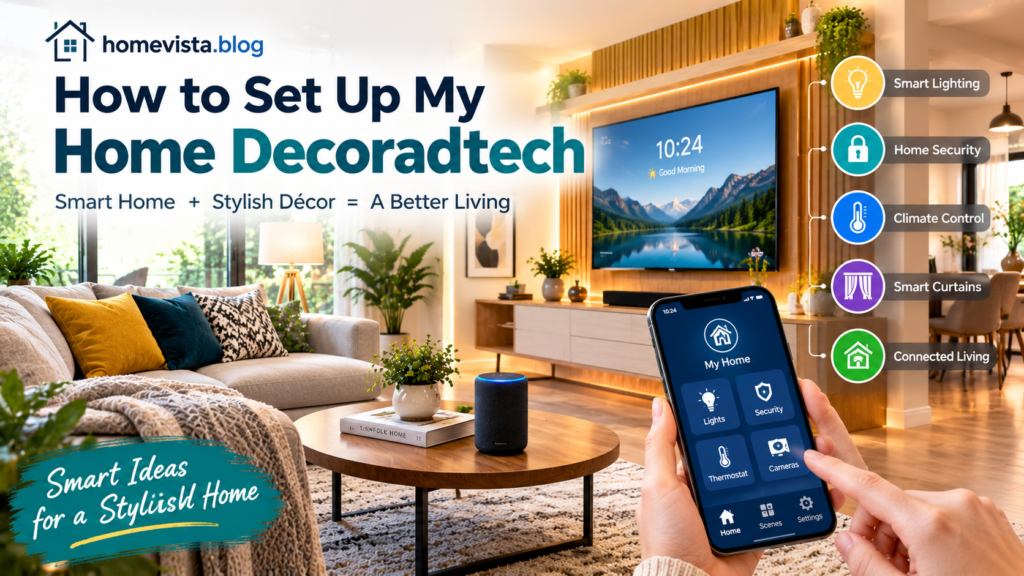
Creating a beautiful home is no longer only about choosing attractive furniture, wall colors, and decorative accessories. Today, homeowners are also looking for ways to make their spaces smarter, more comfortable, and easier to manage. This is where Decoradtech comes in. It combines modern home decoration with useful smart-home technology. If you are wondering how to set up my home decoradtech, the good news is that you do not need to transform your entire house in one day. With proper planning, you can gradually introduce smart lighting, automated devices, comfortable furniture, organized storage, and decorative elements that work together. The goal is simple: create a home that looks stylish while technology quietly makes everyday life easier.
What Is Home Decoradtech?
Home Decoradtech can be understood as the combination of home décor and smart technology. Instead of treating technology and interior design as separate things, this approach brings them together. For example, a smart light can provide useful automation while also fitting naturally into an attractive lamp. A smart speaker can sit neatly on a shelf instead of becoming the main focus of the room. Similarly, smart plugs, thermostats, security devices, and automated curtains can be selected and positioned according to both function and appearance. A successful Decoradtech setup should balance three important elements:
- Style
- Comfort
- Technology
The technology should improve your home rather than make it look crowded with gadgets.
Decide What You Want to Improve
Before purchasing smart devices or decorative items, decide what you actually want to improve.
Ask yourself a few simple questions:
- Do I want better lighting?
- Do I need improved home security?
- Do I want to save energy?
- Would automated curtains be useful?
- Do I need better entertainment options?
- Is my main goal to improve the appearance of my rooms?
- Which everyday tasks could technology make easier?
Creating a simple list will help you avoid buying unnecessary products. For example, if lighting is your biggest problem, you can start with smart bulbs and attractive fixtures. If security is your priority, you can focus on smart locks, cameras, sensors, or a video doorbell. Starting with your needs makes the entire process easier and more affordable.
Create a Room-by-Room Plan
Once you understand your goals, look at your home one room at a time. Do not try to install everything everywhere at once. Instead, identify what each room needs.
Living Room
The living room is usually a good place to begin. Consider smart lighting, a smart speaker, automated curtains, and an entertainment system. Furniture should be arranged so that people can move comfortably around the room. Technology should be positioned where it is useful without creating visual clutter.
Bedroom
A bedroom should feel calm and relaxing. Warm smart lighting, automated curtains, and a smart alarm can improve convenience without overwhelming the space. Keep cables hidden and avoid placing too many devices beside the bed.
Kitchen
The kitchen benefits from practical technology. Smart lighting, timers, connected appliances, and smart plugs can make everyday tasks easier. At the same time, keep countertops organized. Technology should support the kitchen rather than take up valuable preparation space.
Home Office
For a home office, concentrate on productivity and comfort. Good lighting, cable management, smart plugs, and an organized desk can make the room more functional. Choose furniture and accessories that match the rest of your home’s design.
Choose a Consistent Design Style
Your smart devices should fit the visual style of your home.
Popular interior styles include:
- Modern
- Minimalist
- Scandinavian
- Industrial
- Farmhouse
- Contemporary
- Rustic
- Traditional
You do not have to follow one style perfectly. However, choosing a dominant style makes it easier to select furniture, lighting, colors, and technology. For example, a minimalist home may benefit from simple devices with clean shapes and limited visible cables. A traditional interior may work better when technology is integrated into existing furniture and decorative elements.
Improve Your Lighting
Lighting is one of the easiest ways to combine technology and décor. Instead of depending on one ceiling light, consider using several layers of lighting. You can combine overhead lighting with floor lamps, table lamps, wall lights, and accent lighting. Smart bulbs can also provide additional flexibility. Depending on the device, you may be able to control brightness, create schedules, or change lighting settings from a phone or compatible smart-home system. For everyday living, warm and comfortable lighting can create a relaxing atmosphere. Brighter lighting may be more appropriate for reading, cleaning, or working. The important thing is to choose lighting that supports the purpose of each room.
Organize and Hide Cables
One of the biggest problems in a technology-filled home is visible cables. Even an expensive room can look messy when wires are spread across floors, desks, or entertainment centers. Use cable clips, cable sleeves, wire channels, and organized charging stations where appropriate. When possible, position devices close to existing outlets. You can also use furniture strategically. A media console, desk, cabinet, or decorative box can help keep necessary cables organized and less noticeable. Good cable management is an important part of Decoradtech because it allows technology to blend into the interior rather than dominate it.
Select Compatible Smart Devices
Before buying several smart products, check whether they can work together. Different smart-home products may use different platforms or standards. Therefore, compatibility should be considered before making purchases. Start with a small number of devices and make sure they work reliably together. You can then expand your system gradually. Useful starting devices may include:
- Smart bulbs
- Smart plugs
- Smart speakers
- Smart thermostats
- Smart switches
- Smart sensors
- Smart security devices
You do not need every type of device. Choose products according to your home’s actual needs.
Build Simple Automations
Automation is where a Decoradtech setup can become especially useful. Instead of manually controlling every device, create simple routines around your daily schedule. For example, a morning routine could turn on selected lights and start another connected device. An evening routine could reduce lighting levels and turn off selected devices. You might also create routines for:
- Leaving home
- Returning home
- Bedtime
- Movie nights
- Working hours
- Weekend mornings
Keep your automations simple at first. Once you understand how your system works, you can gradually create more advanced routines.
Make Technology Part of the Décor
A common mistake is treating smart devices as separate objects that are simply placed around a room. Instead, think about how each device fits into the overall design. A speaker can be placed on a styled bookshelf. Smart lighting can be incorporated into attractive fixtures. A television can be surrounded by balanced furniture and decorative accessories. Charging stations can be integrated into desks or bedside tables. The goal is to make technology feel intentional. When someone enters the room, the first impression should be of a comfortable and well-designed space—not a collection of electronic devices.
Consider Comfort and Energy Efficiency
A smart home should not only look attractive. It should also make daily life more comfortable. Automated lighting, temperature controls, and smart plugs can help you manage your home more conveniently. Scheduling certain devices can also help reduce unnecessary operation. However, avoid assuming that every smart device automatically saves money or energy. The actual result depends on how the device is used, its efficiency, and the routines you create. Choose technology because it solves a real problem rather than simply because it is popular.
Protect Your Smart Home
Connected devices can become an important part of your home, so security should not be ignored. Use strong, unique passwords for accounts and devices where applicable. Keep device software updated and review the permissions and settings associated with your smart-home system. If you install security cameras or other monitoring equipment, think carefully about placement and privacy. A smart home should provide convenience without creating unnecessary privacy or security risks.
Common Decoradtech Mistakes to Avoid
When learning how to set up my home decoradtech, beginners often make a few common mistakes.
Buying Too Many Devices
More technology does not automatically mean a better home. Start with a few useful devices and expand gradually.
Ignoring the Existing Décor
A device may be useful, but if it completely clashes with your interior, it can make the room look less organized.
Leaving Cables Everywhere
Poor cable management can quickly make a smart home look untidy.
Forgetting Functionality
A beautiful room is not successful if people cannot move around comfortably or use the furniture properly.
Choosing Incompatible Products
Always check compatibility before purchasing multiple devices for the same smart-home system.
Making Everything Automated
Automation should simplify your life. If a routine becomes complicated or unreliable, simplify it.
How to Start on a Small Budget
You do not need a large budget to begin. Start with one room and focus on improvements that provide noticeable benefits. For example, you might upgrade the lighting, organize cables, rearrange furniture, and add one or two smart devices. Once the room works well, move to another part of the home. This gradual approach gives you time to understand what you actually like. It also prevents you from spending money on products that you rarely use.
Final Thoughts
Learning how to set up my home decoradtech is ultimately about finding the right balance between technology, design, comfort, and functionality. Start by identifying your needs, plan each room, choose a consistent design style, and introduce smart devices gradually. Pay particular attention to lighting, cable management, compatibility, organization, and privacy. Most importantly, remember that technology should serve your home—not take over your home.
A successful Decoradtech setup is one where smart features work quietly in the background while your furniture, colors, lighting, and personal touches create a space that feels comfortable and inviting. Whether you are upgrading a single bedroom or redesigning your entire house, thoughtful planning can help you build a home that is both modern and beautiful. Visit my site for more details.